New Tel Aviv University Study Reveals a Possible Evolutionary Secret Behind How Men Walk
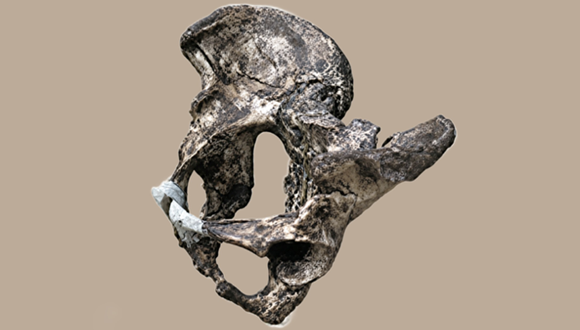
Comparison of Neandertal and modern human pelvises suggests that the male pelvis represents an evolutionary innovation
Support Tel Aviv UniversityA new study from Tel Aviv University suggests that the modern human male pelvis represents a significant evolutionary innovation. Researchers found that male Neandertals had pelvic structures more similar to modern human females than to modern human males—challenging decades of assumptions about how the human pelvis evolved. A natural mechanism that acts as a shock absorber, stores energy, and releases the energy with every step, potentially facilitating long-distance walking in modern human males.
The discovery may also explain why men and women walk differently. According to the researchers, the modern male pelvis evolved a natural “shock absorber” that stores and releases energy with every step, potentially making walking more efficient and helping humans travel long distances on foot.
Led by Professor Yoel Rak of Tel Aviv University’s Department of Anatomy and Anthropology and published in Scientific Reports, the study compared two nearly complete male Neandertal pelvises—one from Israel and one from Spain—with dozens of modern human pelvises.
The researchers found that the hip joints in modern human males are positioned farther forward than in both modern females and male Neandertals. This configuration allows the muscles at the front of the thigh to cushion the body as it moves downward with each step, store energy, and then release it to help propel the body forward.
The researchers believe that modern human females retained a more ancestral pelvic structure because the demands of childbirth require a wider birth canal, limiting how the pelvis could evolve.
“This study demonstrates that questions about human evolution are not confined to the distant past,” says Professor Ella Been of Ono Academic College, a co-author of the study. “The perspective provided by the Neandertals helps us better understand the modern human body.”
The findings could have implications beyond human evolution, potentially informing research into biomechanics, rehabilitation, musculoskeletal medicine, and injury prevention.
The study was conducted by researchers from Tel Aviv University in collaboration with researchers in Spain, the Technion, Bar-Ilan University, and Ono Academic College.
Study published in: Scientific Reports