Tel Aviv University Breakthrough Moves Closer to Helping People with Spinal Cord Injuries Walk Again
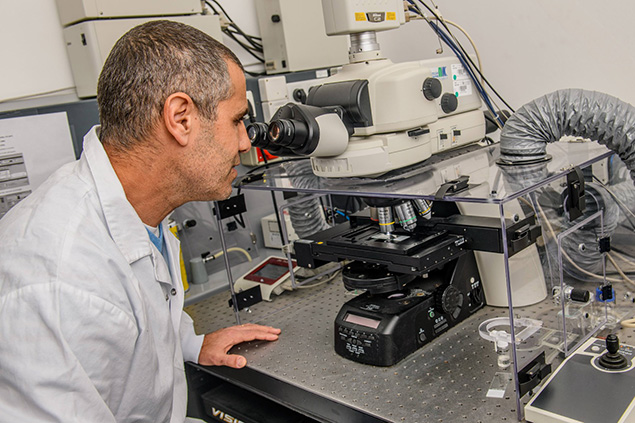
Photo credit: Tel Aviv University.
For millions of people living with paralysis after spinal cord injuries, the possibility of walking again has long seemed impossible. A groundbreaking technology developed at Tel Aviv University’s Sagol Center for Regenerative Medicine could help change that.
Biotechnology company Matricelf and Loewenstein Rehabilitation Medical Center, one of Israel’s leading centers for spinal cord injury rehabilitation, are joining forces to prepare for the potential first implantation of a personalized engineered neural implant in a person with paralysis.
The collaboration marks an important step in moving the technology from the laboratory toward human treatment.
Developed by Prof. Tal Dvir of Tel Aviv University, the technology is designed to create a personalized biological implant using a patient’s own cells. The goal is to repair damaged spinal cord tissue and restore the communication pathways needed for movement—with the ultimate hope of helping people with paralysis stand, walk, and regain greater independence.
An implant made from your own cells
What makes the technology particularly innovative is that the implant is personalized for each patient.
If a patient is selected to participate and receives the necessary approvals, a blood sample will be collected. Researchers will use cells from that sample to create induced pluripotent stem cells (iPSCs), which can then be used to produce the cellular component of the neural implant.
In simple terms, the patient’s own cells become the building blocks for an implant designed specifically for them.
The implant would then be placed at the site of the spinal cord injury, with the aim of helping regenerate damaged neural tissue and restore connections between the brain and the body.
Because the implant is created from the patient’s own cells, researchers hope it will integrate more naturally with the body and reduce the risk of rejection.
From TAU research to potential patient treatment
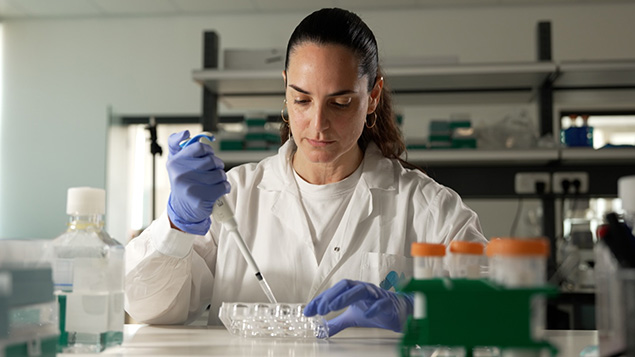
Photo Credit: Matricelf.
Prof. Dvir’s research at Tel Aviv University’s Sagol Center for Regenerative Medicine laid the scientific foundation for this approach. Dvir now serves as Matricelf’s Chief Scientist.
The collaboration with Loewenstein will focus on identifying and evaluating potential patients and preparing for the production of personalized implants. The hospital will also contribute its extensive clinical and rehabilitation expertise in treating people with spinal cord injuries.
“The collaboration with Matricelf connects Loewenstein’s clinical and rehabilitation expertise with innovative regenerative medicine technology,” said Dr. Dianne Michaeli, Deputy Director of the Orenstein Spinal Cord Injury Rehabilitation Department at Loewenstein Rehabilitation Medical Center. “We hope that in the future it will be possible to offer new treatment options to people living with paralysis due to spinal cord injury.”
The collaboration builds on Matricelf’s partnership with Sheba Medical Center, where the first implantation procedure is expected to take place.
Because each personalized implant takes several months to produce, the early identification of potential patients and collection of blood samples will allow researchers to prepare while the regulatory process moves forward.
If all scientific and regulatory milestones are met, Matricelf estimates that treatment of the first selected patient could begin in the first half of 2027.
A promising step—but not yet a treatment
While the potential is significant, the technology has not yet been tested in humans. The patient identification process does not constitute approval for a clinical trial or for implantation.
Any treatment will require completion of the necessary scientific and regulatory requirements and final approval from Israel’s Ministry of Health.
Still, the journey from a Tel Aviv University laboratory to the threshold of a potential first-in-human treatment represents an extraordinary milestone in regenerative medicine.
For people living with paralysis, it offers something equally important: the possibility that one day, damaged spinal cords may be repaired rather than simply managed.
And it is another example of how breakthrough research at Tel Aviv University can move beyond the laboratory—with the potential to change lives.